How to get better at public speaking - even if you've tried it all before
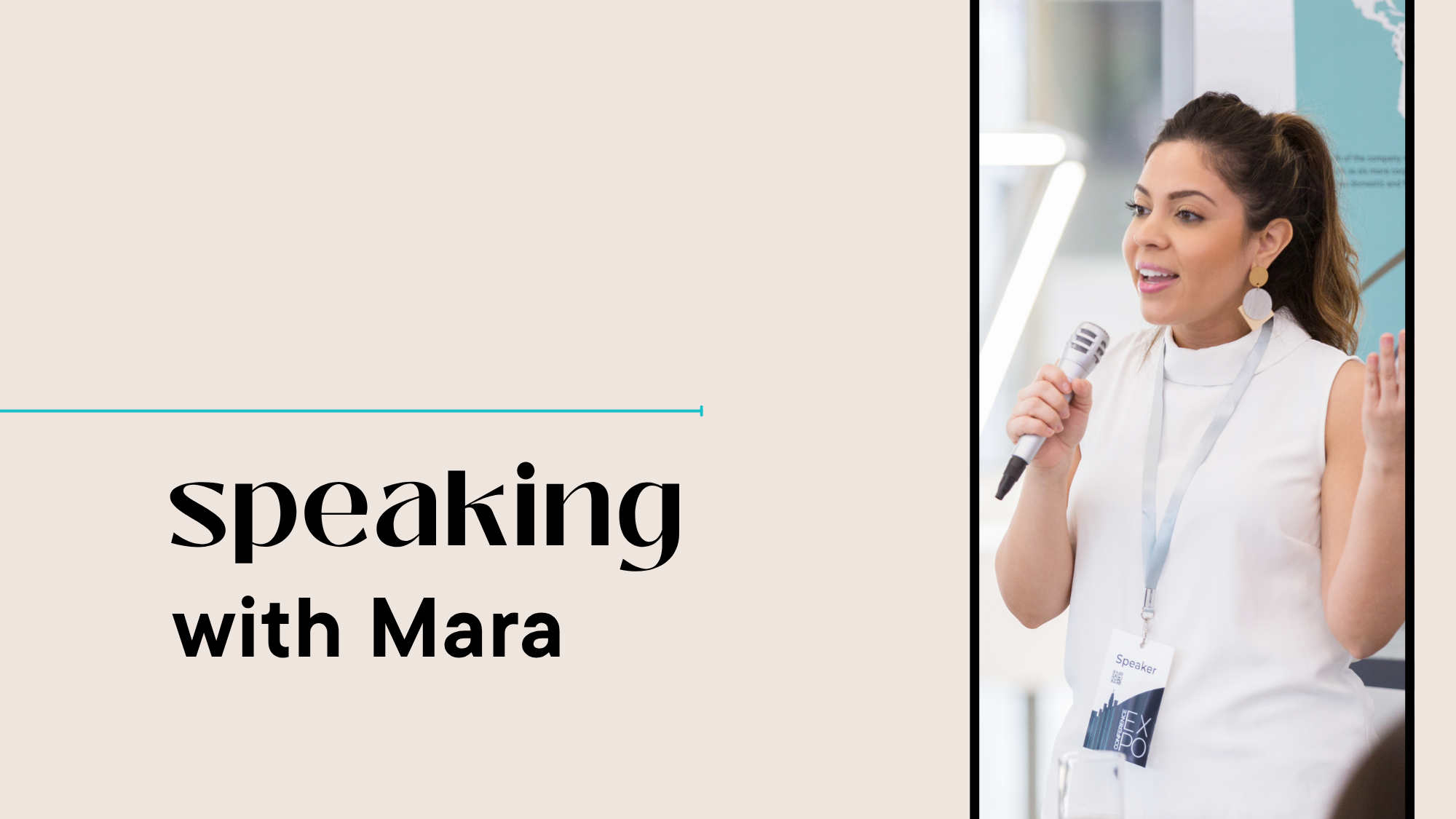
If you clicked into this, it’s probably because you know you have room to grow in the public speaking department. You’re definitely not alone in that!
Maybe you’re a vibrant person, but it’s not coming across in your presentations. Maybe you can’t speak in front of other people without becoming a fountain of filler words. Maybe you start with a clear talk track but head straight to ramble-town the second someone asks a question.
You find yourself replaying it afterwards and knowing you could do better.
If any of this sounds familiar, you’re in the right place and I’m excited to share some tips on how to do the work that will help you reach your goals.
In this post, I’ll be sharing:
Why this is such a make or break skill for ambitious professional women trying to grow their careers
How to start improving your public speaking and so you can position yourself to make big moves in your career
How to deal with nerves when they come up in the middle of your presentation
Ready to dive in?
Why public speaking is a make or break skill
Let’s face it. Getting up in front of people and doing anything is scary. And almost everyone I know deals with some kind of stage fright, myself included, especially when it comes to public speaking. I performed in front of live audiences for 25 consecutive years (I have a whole degree in it!) and I still can’t get up to do the thing I trained my whole life for without getting nervous.
As a woman in the working world, this fear takes on a new light. When you’re not able to speak and present in a confident and engaging way, you’re seen as incapable.
You have the skills to take on major strategic initiatives, but if you can’t voice your strategy, you’ll never be given the chance to execute it.
You have all the expertise to solve problems plaguing your team, but if you can’t give a presentation that keeps people’s focus, they won’t actually hear your ideas.
You possess all the qualities of a high-impact leader, but if you can’t speak with authority, they’ll think you’re too timid to lead a team.
Being a strong speaker opens doors to career growth
Becoming a better speaker at work isn’t just about being able to give flashy speeches or sales pitches. This is the skill at the backbone of growing your career.
From things like answering the classic “tell me about yourself,” to being able to translate your experience and skillset when transitioning to a new industry, to pitching yourself for a major project or growth opportunity in your role.
Knowing that you can clearly articulate your thoughts, present them in a way that resonates, and even be persuasive when you do it, unlocks the door out of entry-level work. And for ambitious women like us, that’s exactly what we’re after.
Results in action
Irene came into our work knowing exactly what she needed to address. She felt her presentations were boring and she didn’t feel confident giving them.
We focused our time on digging into why they felt off, shifting how she thought about presenting, and implementing strategies to evolve her speaking.
“One of my biggest breakthroughs was learning how to use pause strategically. I used to rush through important points because silence felt uncomfortable. Now I intentionally pause to let ideas land, create emphasis, and truly connect with the room. It is incredible how something so simple can shift your presence from nervous to grounded and in control.
Mara gave me practical tools I will use forever, not just quick tips. I feel more confident, more aware, and more authentic every time I speak.”
She used her new speaking confidence to land a job at a new organization and pivot roles in the process, all in just six months.
Tips for becoming a better public speaker
Preparation
It is very difficult to give a strong presentation when you don’t know what you need to say. You have to prepare ahead of time. This will evolve as you become more confident in your speaking ability, but as you’re starting out, you need to spend time:
Reviewing your talk track - you have to know what you’re going to say and understand the journey of your presentation
Figuring out your key points - you have to understand which parts of your presentation are most impactful so you can treat them accordingly
Getting clear on how you want your audience to walk away feeling - this will guide your approach and take your presentation from rehearsed monotony to dynamic speaking
Practice
I hate to break it to you, but you have to practice. And the conventional wisdom holds true here, the best way to improve in the shortest amount of time is to record yourself and watch it back. And I can already hear you complaining about how much you hate the sound of your voice. I know you do. Everyone does - there’s even some science to it (more on this at the bottom for my fellow nerds)! But you have to push through it. This will help you spot your bad habits, identify the things that are working, and track your progress as you improve.
Feedback
A presentation is only as strong as the way it’s received, so you’ll want to gather feedback on how you’re coming across. You can ask people you trust to get feedback on what’s working, what feels dull, what makes people lean forward in their chairs a little.
Feedback from peers can help you get clear on the list of things that need fixing, but working with a coach will help you turn that list into meaningful change and tangible results. It shortens the distance between where you are now and being able to use your speaking skills as a tool to shape your career. My Director-Level Communication clients typically move into a new (read: better aligned, higher salaried) role within 6 months of starting our work together.
Okay cool, but what about my nerves??
If you’re thinking: “I’m beyond prepared and I’m practicing, but I still get so nervous that it all goes away when I open my mouth so now what do I do?” I hear you. Dealing with nerves is the hardest part because it’s really difficult to recreate them when you’re practicing.
If you catch your nerves getting out of control while you’re presenting, find a time to reset. That’s going to mean silence for a second and that’s okay. Get one decent breath in or take a sip of water - anything that buys you a moment to downshift. When you start again, try to slow your speaking down. Aim for something just shy of painful and you’ll level out somewhere in the middle after a sentence or two.
Do a quick scan of your body. Are you tensing your shoulders or your butt cheeks? Clenching sets off alarm bells for your nervous system, so let them go and try (I know…) to relax as much as you can. If you find yourself stiff and locked up, try using your hands when you speak or fidgeting with something like a pen DISCRETELY. If you’re presenting in person, you can take a small step to the side to start to loosen up. Anything to remind your body that it can move will work.
The journey to confident public speaking
Making lasting changes in your public speaking can be tricky and takes time, but you don’t have to figure it all out on your own.
Working with a coach can help expedite the process by making sure you’re getting advice tailored to your specific situation and goals.
In my program, Director-Level Communication, I work with high-achieving women just like you to help them unpack their bad habits, practice communicating in a way that reflects their capacity, and position themselves for new roles and opportunities that get them out of entry-level and into their dream careers.
In the first portion of the program, we focus on setting strong foundations. Covering all of the essentials when it comes to planned presentations, impromptu speaking, reading the room and adjusting your style to fit the needs.
In the second half, we focus on your specific goals. We dig deeper into the mindset shifts you’ll need to see meaningful change, investigate how you self-police your communication at work, and help you turn all of these skills into a powerful personal pitch so that you can grow your career.
Click here to learn more about Director-Level Communication.
If you only hear one thing I’ve said here, let it be this: you can get better at public speaking. Little changes compound over time and create the growth that you’re looking for. So try one thing until you get comfortable with it, then add another. Keep going until you reach your goals.
You’ve totally got this!
Bonus Nerd Stuff: Why you hate the sound of your own voice
When you typically hear yourself speak, you are hearing that sound through your ears, but it’s also influenced by how it resonates inside your skull. If you think about your vocal tract as an instrument, like a trumpet, your mouth and head are like the bell - they shape the resonance of the sound. Things like the size of your head, how wide you open your mouth, and the placement of your tongue can all impact how much or little resonance occurs.
When you hear your voice played back to you, you’re missing all of that resonance you’re accustomed to. You’re hearing your voice with only your ears so it sounds distorted and weird. It happens to all of us. But I promise, it doesn’t sound nearly as strange to other people as it does to you. They’re used to hearing you through their ears, so it’s just another day for them.
